Part 1: Finding the Youth and Cracking the Attrition Rate
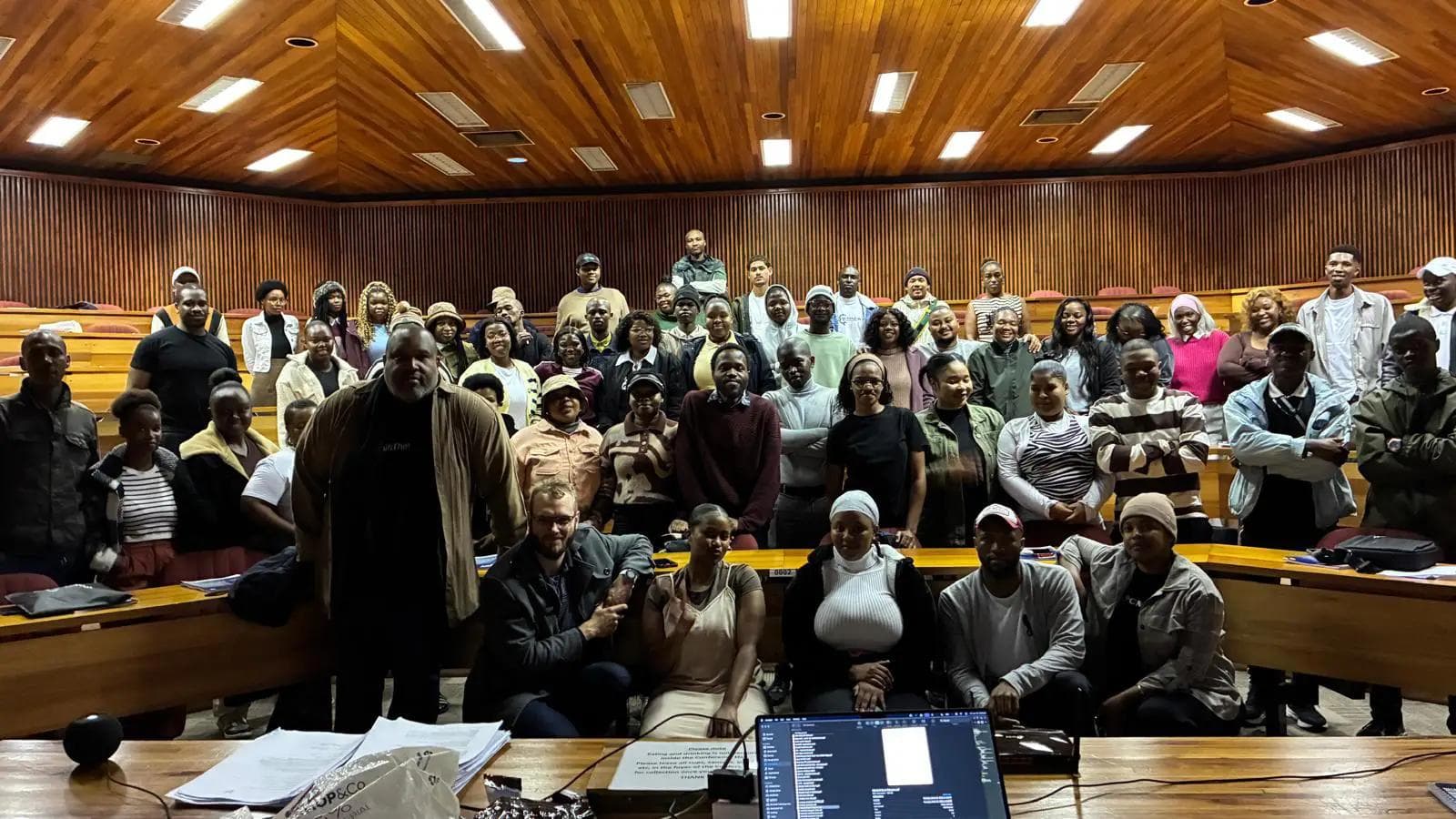
Over six weeks, my team and I, contracted by GFA, travelled across South Africa delivering the GIZ Digital Skills for Jobs and Income II (DS4JI II) Self-Employment Programme. Our target was to reach more than 500 NEET youth across six provinces, including more than 100 young people with TVET qualifications.
NEET stands for young people who are Not in Employment, Education or Training, but there was an important difference with the group we were looking for. These were young people who already had an IT background, qualification or some level of digital skills. We weren't teaching people how to use a computer for the first time. Many had studied IT at a TVET college, university or private institution, completed shorter training programmes, or developed skills independently in areas such as software development, web development, IT support, cybersecurity, digital marketing, content creation and data.
The question we were trying to answer was what happens after the training. What happens when someone has spent several years developing an IT skill or even completed a qualification, but is still unemployed and has never been able to turn that skill into income?
One of the first challenges was simply finding enough young people who met those requirements across multiple provinces within a very short period of time. Working with SA Youth gave us the ability to recruit at a scale we would not have been able to achieve through our own networks alone. Across the programme, we received 7,882 applications and recruited more than 1,300 young people into the pipeline.
At first glance, those numbers make a target of 500 participants look relatively easy. What we quickly learned was that the number of applications means very little if you don't understand the attrition that happens between someone applying, confirming their attendance and physically walking into the venue.
This became one of the biggest operational lessons from the entire programme.
By the time we understood the pattern, our approach was to aim for approximately 200 suitable applicants for a workshop where we ultimately wanted around 60 people in the room. From those 200 applicants, we might get around 120 people to confirm their attendance. Even after confirming, we learned to expect only around 50% to actually arrive on the day. If only 60 confirm, we'd expect only 30 to attend. That is a ratio of 10 : 6 : 3.
So, for every 10 applications, roughly 6 people confirmed and.
For anyone accustomed to running business events or workshops, a 50% no-show rate after confirmation sounds extremely high. However, we were working specifically with unemployed young people, and the circumstances are very different. Transport, distance, family responsibilities, access to data and simply having enough money available that morning to get to the venue can determine whether someone who genuinely wants to attend is able to do so.
That changed the way we looked at attrition. It wasn't enough to put an opportunity online and count applications. Recruitment continued right up until the workshop started through phone calls, WhatsApp messages, confirmations, reconfirmations, venue information and coordination with our local partners. If we wanted 60 people in a room, we had to accept from the beginning that we needed to recruit far more than 60.
Once participants started arriving, the pre-assessment gave us a much better understanding of who was actually sitting in the room. We collected 378 pre-assessment responses, and the results confirmed something we had suspected from the beginning. A large percentage of these young people already had useful digital skills.
Participants reported experience in data capturing and administration, video editing and content creation, social media management, web design and development, coding and software development, cybersecurity and IT support, digital marketing, AI and prompt engineering, graphic design and eCommerce. Some had formal qualifications, while others had completed short courses or developed their skills independently.
The more important number for us was that 247 of the 378 respondents, or 65.3%, had never earned money using those digital skills.
That started to change how we thought about the programme. South Africa has invested heavily in digital skills development, and there are many programmes teaching young people coding, IT support, cybersecurity, digital marketing and other technology skills. Yet here we were sitting with hundreds of young people who had already received some form of training and were still outside the economy.
For us, the gap wasn't simply skills development. There was a gap between having a digital skill and knowing how to turn that skill into income.
Over the six-week rollout, we delivered the programme across the Western Cape, Eastern Cape, KwaZulu-Natal, Gauteng, Limpopo and Mpumalanga, working through innovation hubs, educational institutions and local ecosystem partners.
Cape Town was particularly important because it was where we started learning what worked and what didn't. At our early RLabs workshop, we could see that Day 1 was too facilitator-heavy. We had good content, but we were spending too much time talking to participants instead of getting participants involved in the conversation. By Day 2, we changed the room and the facilitation approach to encourage more discussion, practical exercises and interaction between participants, and the difference in engagement was noticeable.
We carried those lessons into the next workshop at TSIBA and then continued adjusting as we moved around the country. By the time we reached Durban, Umlazi, Johannesburg, Soweto and the other locations, we had become much more comfortable allowing the participants themselves to shape parts of the conversation. The programme objectives didn't change, but the way we delivered them continued to improve.
That experience reinforced something we have learned repeatedly at GRIT Hub. You can design a programme in an office, but you don't really understand it until you put it in front of the people it was designed for. Participants are giving you feedback all day, even when they aren't filling out a feedback form. You can see it in the questions they ask, when the room goes quiet, when discussions continue into the break and when an activity suddenly gets everyone talking.
By the end of the programme, we stopped seeing attrition purely as a recruitment problem. The fact that we received 7,882 applications told us there was no shortage of young people looking for opportunities. The challenge was converting that interest into actual participation.
One young woman brought that home for me when she travelled from Riversdale, around an hour and a half by bus, to attend one of our workshops. When you are working with thousands of applications, it is easy to reduce people to numbers on a spreadsheet. Meeting participants who had travelled significant distances to be there reminded us that attending a two-day programme can itself require a considerable commitment when you are unemployed.
For organisations working with NEET youth, this needs to be built into programme planning from the beginning. If you need 60 people in a room, recruiting 60 people and hoping they all arrive is simply not realistic. Our experience was to aim high, recruit well beyond the final attendance target and keep communicating with participants throughout the process.
But recruitment and attendance were only the first part of what we learned.
Once we had hundreds of young people with IT qualifications and digital skills sitting in front of us, the bigger question was what we could actually give them that they hadn't already received from previous training.
The answer wasn't another IT course.
The DS4JI II programme we delivered was specifically designed as a Self-Employment Bootcamp, focused on helping participants understand the digital economy, identify realistic self-employment opportunities and develop the basic business and financial knowledge required to participate in the digital marketplace.
Instead of teaching someone how to code, we wanted to talk about how a coder gets their first client. Instead of teaching web development, we wanted to talk about how a web developer packages and prices a service, writes a quotation and gets paid. We wanted participants to understand business registration, compliance, contracts, invoicing, marketing, financial management, mentorship and where to find support after the programme.
That became the second half of our journey across South Africa, and it is where some of the most interesting results started to emerge.